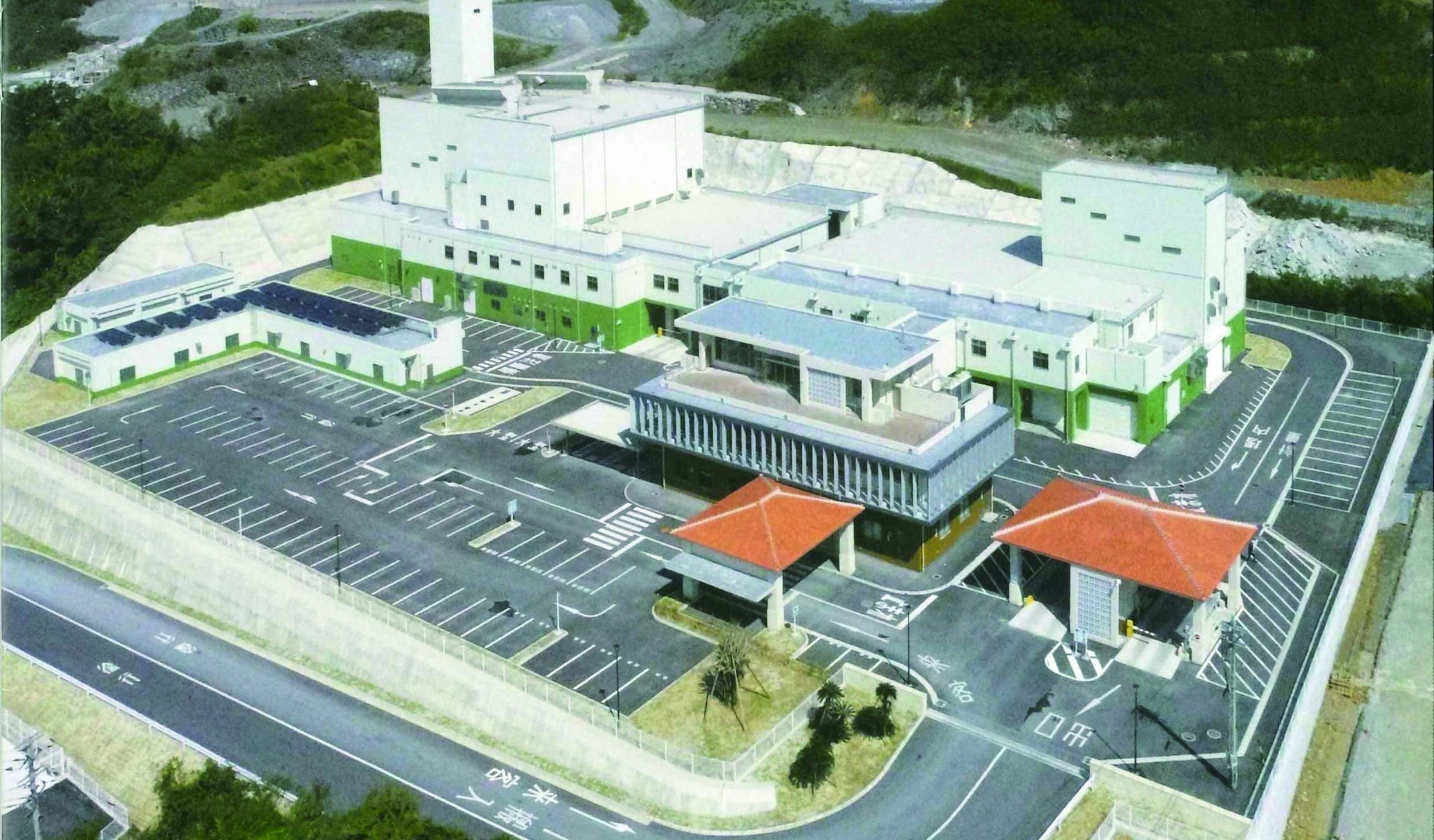
Material recycling centers are facilities that efficiently crush and sort bulky waste and recyclable materials disposed of as general waste by municipalities.
In recent years, growing public interest in environmental issues and the establishment of various laws have led to increased efforts to recycle used materials such as aluminum, steel, PET bottles, and plastics.
As a result, the role of recycling centers continues to grow in importance.
Our recycling center meets growing societal needs and contributes to the realization of a "circular economy."
Starting with the Smoke Control Act of 1962, Japan has issued a variety of laws and regulations to address environmental issues. In particular, the "Basic Act for Promoting the Creation of a Recycling-Based Society," promulgated in 2000, clearly stated the need to shift from the previous "mass production, mass consumption, and mass waste" model to a "circular economy" and advocated the promotion of the 3Rs (reduce, reuse, and recycle).
There are three types of recycling methods: material recycling (reusing waste as materials/raw materials), chemical recycling (reusing waste by converting it into other substances), and thermal recycling (reusing the heat energy generated during waste incineration). Of these, material recycling is the most effective method because it consumes less energy than other recycling methods.
The equipment we deliver is pretreatment equipment for material recycling.
By minimizing impurities and properly sorting waste, we maximize the effectiveness of material recycling.
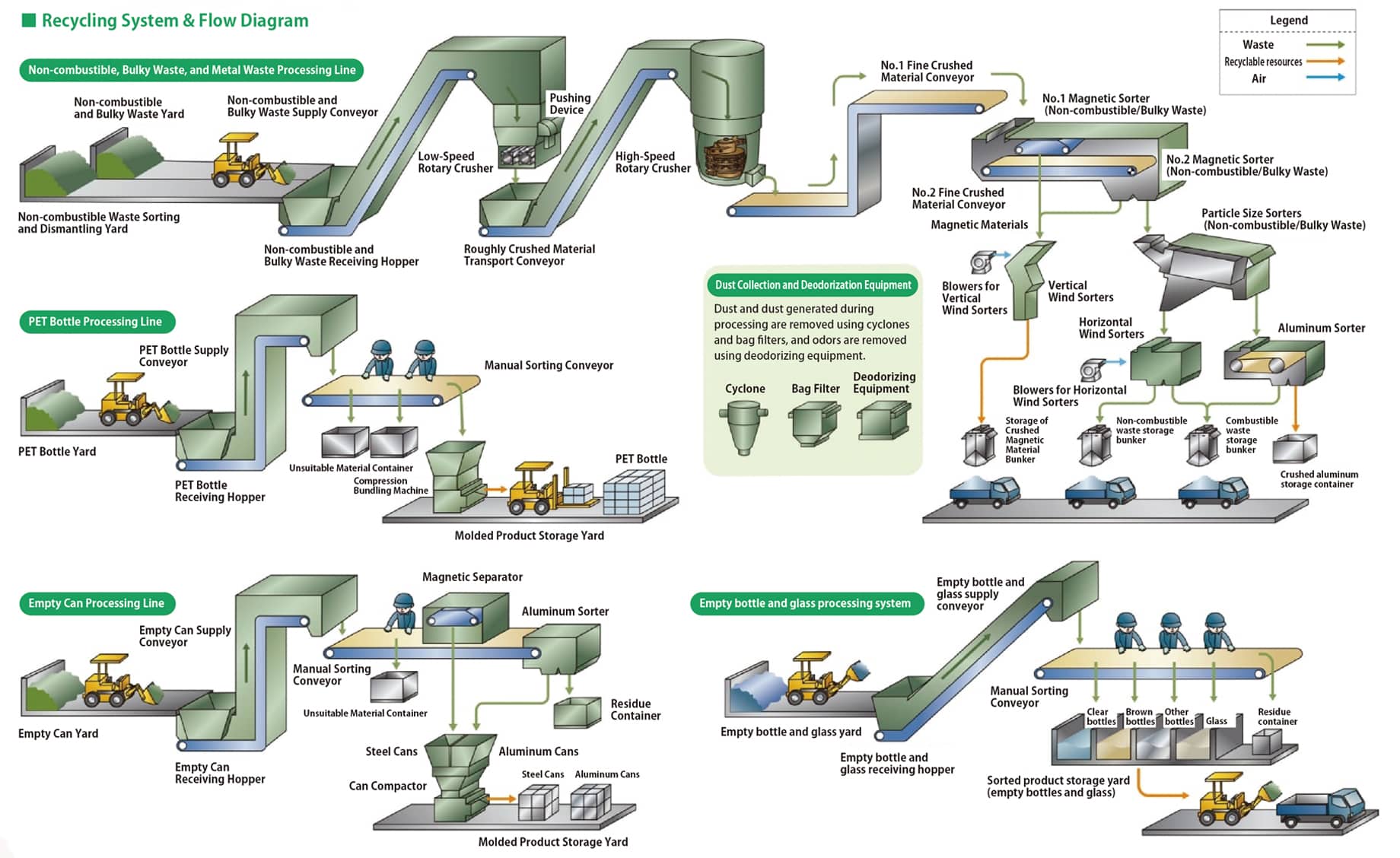
Large waste such as furniture, home appliances, and scrap materials is crushed and sorted. Sorted valuables (steel, aluminum) are recycled, combustible waste is incinerated, and non-combustible waste is disposed of at a final disposal site.
Cans, which contain a variety of materials, are sorted by material, such as aluminum or steel. The bottles are then compressed and molded into an easy-to-transport shape (rectangular) and transported to a recycling facility.
PET bottles are sorted by their constituent materials (bottle bodies: PET, caps: PP, PE). After sorting, they are compressed and packaged before being delivered to specialized companies.
Plastic waste of various shapes and materials, such as packaging and labels, is sorted, compressed and packaged, and delivered to specialized companies.
Bottles and glass are hand-sorted by color and delivered to specialized companies.